

Introduction: Is Drinking Coffee Every Day Healthy?
For millions of people, coffee is more than just a morning drink. It is part of their daily routine. Some enjoy a hot cup before starting work, while others prefer an afternoon cappuccino or latte to take a short break from a busy day.
But is drinking coffee every day actually good for your health?
The answer is generally yes, provided you consume it in moderation. Research suggests that moderate coffee consumption may be associated with several health benefits, including improved alertness and a lower risk of certain long-term health conditions.
However, the amount of caffeine, added sugar, milk, syrups and even the time you drink coffee can make a difference.
Whether you enjoy black coffee at home or prefer a freshly prepared cappuccino from your favourite coffee shop, understanding your coffee habits can help you make better choices.
Let’s explore what science says about daily coffee consumption and how to enjoy your favourite cup more wisely.
1. Coffee Helps Improve Alertness and Focus

One of the main reasons people drink coffee is its ability to make them feel more awake.
Coffee contains caffeine, a natural stimulant that affects the central nervous system. It works by blocking adenosine receptors in the brain. Adenosine is a chemical involved in promoting tiredness and sleepiness.
When caffeine blocks its effects, you may temporarily feel more alert and focused.
Some common benefits include:
- Improved mental alertness.
- Better concentration during everyday activities.
- Faster reaction time.
- Reduced feelings of tiredness.
- A temporary boost in energy.
For example, having a cup of coffee before starting your morning work may help you feel more prepared and attentive.
However, coffee is not a replacement for proper sleep. Drinking more caffeine to compensate for insufficient rest can create problems with your sleep schedule.
2. Coffee Contains Antioxidants and Beneficial Compounds
Coffee contains more than just caffeine.
It also provides naturally occurring plant compounds, including polyphenols and chlorogenic acids, which have antioxidant properties.
Antioxidants help protect cells from oxidative stress caused by unstable molecules known as free radicals.
Research has explored the relationship between regular coffee consumption and several long-term health conditions.
Some findings include:
Type 2 Diabetes
Several large observational studies have found that regular coffee drinkers tend to have a lower risk of developing type 2 diabetes. Both caffeinated and decaffeinated coffee have shown associations with this benefit.
Heart Health
Research published in cardiovascular health journals has found an association between moderate coffee consumption and a lower risk of certain cardiovascular conditions.
Liver Health
Studies have also linked coffee consumption with a lower risk of some liver conditions, including liver fibrosis and cirrhosis.
Important:
These findings show associations, not proof that coffee directly prevents diseases. Coffee should not be considered a medicine or a substitute for a balanced diet and healthy lifestyle.
3. How Much Coffee Should You Drink Per Day?
Moderation is important when it comes to caffeine.
According to the US Food and Drug Administration (FDA), up to 400 mg of caffeine per day is an amount not generally associated with negative effects for most healthy adults.
However, caffeine content varies depending on the coffee beans, serving size and preparation method.
Caffeine content in popular drinks
Here is an approximate comparison:
| Coffee or beverage | Approximate caffeine |
| Brewed coffee (240 ml) | 95 mg |
| Espresso (one shot) | 65 mg |
| Instant coffee (240 ml) | 60 mg |
| Black tea (240 ml) | 47 mg |
| Green tea (240 ml) | 28 mg |
| Decaf coffee (240 ml) | 4 mg |
These figures are estimates. Actual caffeine levels vary by brand, serving size and preparation method.
A large café-style coffee may contain significantly more caffeine than a small cup.
A practical tip: Pay attention to the number of espresso shots in your drink. A double-shot latte, for example, generally contains more caffeine than a single-shot latte.
You can enjoy your favourite coffee without exceeding your personal caffeine tolerance.
4. What Happens When You Drink Too Much Coffee?
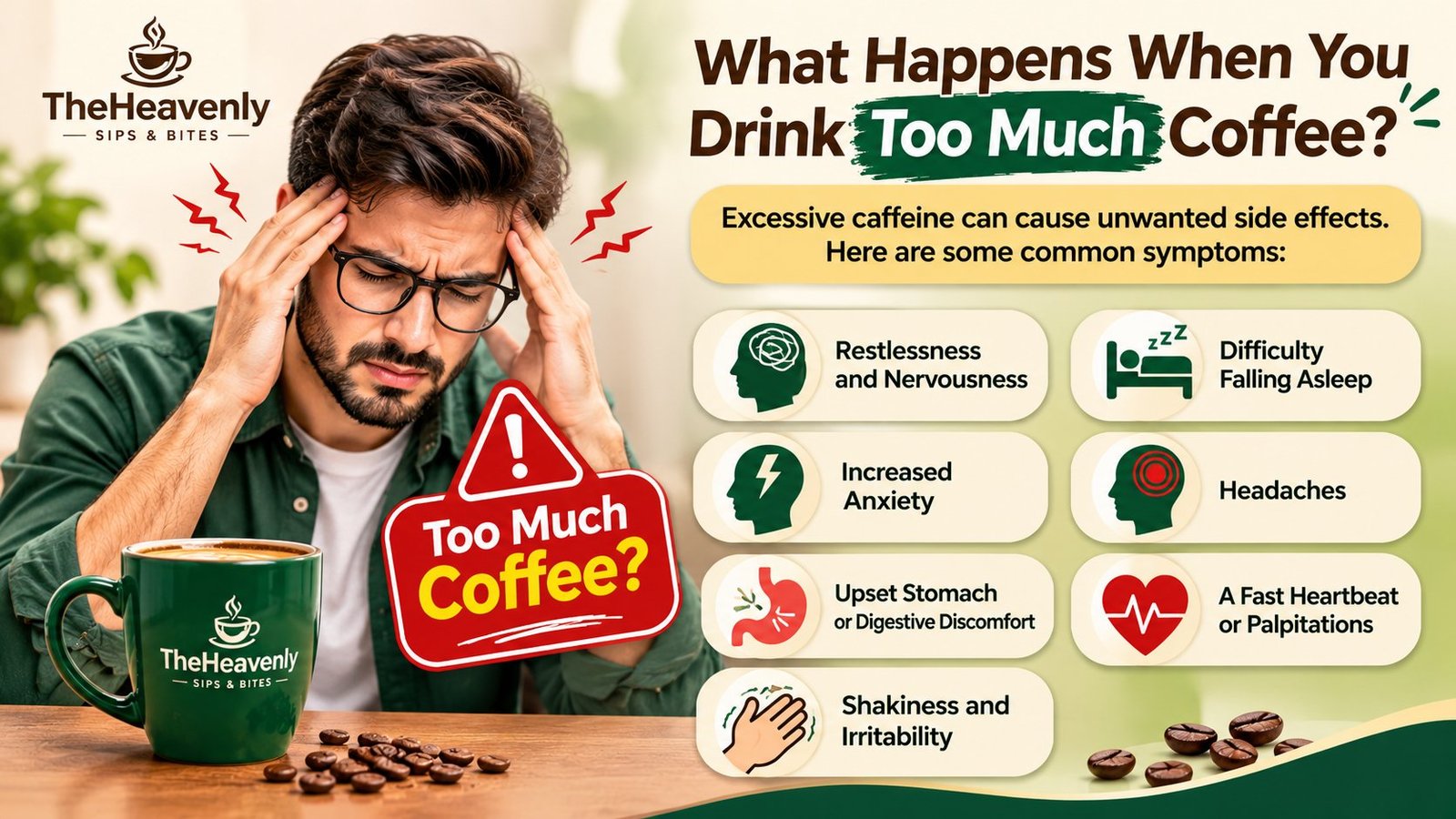
Although coffee can fit into a healthy lifestyle, excessive caffeine consumption may cause unwanted side effects.
Some people are more sensitive to caffeine than others.
Common symptoms of excessive caffeine consumption include:
- Restlessness and nervousness.
- Difficulty falling asleep.
- Increased anxiety.
- Headaches.
- Upset stomach or digestive discomfort.
- A fast heartbeat or palpitations.
- Shakiness and irritability.
If you regularly experience these symptoms after drinking coffee, consider reducing your intake.
It is also better to reduce caffeine gradually rather than suddenly stopping if you consume several cups every day. Abruptly stopping caffeine can cause temporary headaches, fatigue and irritability.
5. Does Drinking Coffee at Night Affect Your Sleep?
Yes, it can.
Caffeine does not disappear from your body immediately after drinking coffee. Its effects can continue for several hours.
Research from Harvard explains that caffeine can remain in the bloodstream for approximately 1.5 to 9.5 hours, depending on individual factors.
This means an evening coffee may still affect your ability to fall asleep at bedtime.
When is the best time to drink coffee?
| Time | Recommendation |
| Early morning | A good time for your morning coffee |
| Late morning | Suitable for many coffee drinkers |
| Afternoon | Consider your bedtime and caffeine sensitivity |
| Evening | Limit caffeine if it affects your sleep |
| Before bedtime | Best avoided if you are sensitive to caffeine |
A practical approach is to avoid caffeine for around 6–8 hours before bedtime, adjusting this window according to your personal sensitivity.
If you enjoy the taste of coffee in the evening, decaffeinated coffee may be an alternative.
6. Who Should Be Careful About Drinking Coffee?
Coffee is not equally suitable for everyone.
Certain groups should pay closer attention to their caffeine intake.
Pregnant Women
The American College of Obstetricians and Gynecologists recommends limiting caffeine consumption to less than 200 mg per day during pregnancy. Always discuss individual dietary needs with a healthcare professional.
People with Anxiety or Sleep Problems
Caffeine may increase nervousness and interfere with sleep in sensitive individuals. Reducing consumption may help.
People with Heart Rhythm Problems
Caffeine can cause palpitations in some people. Those with existing heart rhythm conditions should discuss their coffee intake with their doctor.
People with Acid Reflux
Coffee may trigger or worsen reflux symptoms in some individuals. If you notice discomfort after drinking coffee, consider reducing your intake or avoiding it.
People Taking Certain Medications
Some medications can affect how the body processes caffeine. Ask your healthcare professional if you are unsure whether coffee is suitable for you.
7. Is Black Coffee Healthier Than Coffee with Milk and Sugar?
The answer depends on what you add to your coffee.
Plain black coffee contains very few calories and no added sugar.
However, popular café drinks such as flavoured lattes, caramel coffees and sweetened iced coffees can contain considerable amounts of added sugar and calories.
Here is a simple comparison:
| Coffee type | General nutritional consideration |
| Black coffee | Very low in calories |
| Espresso | Small serving with little to no added sugar |
| Cappuccino | Contains milk and natural milk sugars |
| Latte | Usually contains more milk |
| Flavoured latte | May contain additional sugar from syrups |
| Sweet iced coffee | Can contain considerable added sugar |
Milk is not unhealthy simply because it adds calories. It also provides nutrients such as protein and calcium.
The main thing to watch is excessive added sugar, flavoured syrups, whipped cream and sweet toppings.
How to Make Your Daily Coffee Healthier
Here are some simple changes:
- Reduce added sugar gradually.
- Choose smaller serving sizes when appropriate.
- Avoid adding too much flavoured syrup.
- Try cinnamon for additional flavour.
- Choose plain coffee more often than heavily sweetened drinks.
- Enjoy speciality coffee drinks as an occasional treat.
You do not have to give up your favourite latte or cappuccino to maintain a balanced lifestyle.
8. A Real-Life Coffee Habit: Enjoying the Moment Without Overdoing It
Think about a familiar coffee-shop experience.
You have a busy morning, several tasks to complete and barely any time to relax. You prepare a cup of coffee, take a few minutes for yourself and then return to your work feeling more alert.
Later in the afternoon, you may want another cup, perhaps a cappuccino or latte from your favourite café.
This is where developing a balanced coffee habit matters.
Instead of automatically ordering another large coffee whenever you feel tired, consider whether you actually need more caffeine. Sometimes a glass of water, a proper meal or a short break may be more helpful.
At The Heavenly Sips & Bites, coffee lovers in Mirpur can explore different coffee options, including espresso, cappuccino and latte.
Whether you prefer a stronger coffee flavour or a smoother milk-based drink, choosing according to your taste and caffeine tolerance can make your coffee routine more enjoyable.
If you are looking for coffee in Mirpur AJK, you can explore The Heavenly’s coffee menu and other food and beverage options.

Explore the menu: https://theheavenly.pk/menu/
9. Practical Tips for Building a Healthier Coffee Routine
You do not need complicated rules to enjoy coffee responsibly.
A few everyday habits can make a difference:
1. Monitor Your Caffeine Intake
Keep your total caffeine consumption within recommended limits. Remember that tea, chocolate, energy drinks and some medicines may also contain caffeine.
2. Avoid Excessive Sugar
Try reducing sugar and flavoured syrups in your everyday coffee.
3. Drink Coffee Earlier
Avoid late-day caffeine if it affects your sleep.
4. Stay Hydrated
Coffee contributes to your daily fluid intake, but water should remain your main source of hydration.
5. Listen to Your Body
If you experience anxiety, digestive discomfort or sleep disturbances, reconsider your caffeine consumption.
6. Choose Your Coffee According to Your Preferences
You might enjoy espresso for a stronger flavour, cappuccino for a balanced milk-and-coffee combination or latte for a smoother drink.
The best coffee routine is one that fits your lifestyle without affecting your health or sleep.
10. Enjoy Your Favourite Coffee at The Heavenly in Mirpur AJK
Coffee is not just about caffeine. For many people, it is also about taste, comfort and taking a moment away from a busy routine.
If you are searching for a coffee shop in Mirpur AJK, The Heavenly Sips & Bites offers several coffee options to explore.
Its published menu includes:
- Espresso: For people who enjoy a concentrated coffee flavour.
- Cappuccino: A classic coffee option with espresso and milk foam.
- Latte: A smoother milk-based coffee drink.
Whether you prefer a morning espresso or an afternoon latte, you can explore the available options through The Heavenly’s online menu.
Alongside coffee, you can also discover burgers, pizza, pasta, desserts and other food options.
Looking for coffee in Mirpur or something delicious to enjoy with your favourite drink?
Explore The Heavenly menu: https://theheavenly.pk/menu/
Frequently Asked Questions (FAQs)
For most healthy adults, drinking coffee daily is generally safe when consumed in moderation. Coffee may also be associated with certain long-term health benefits. However, individual caffeine sensitivity matters.
The FDA considers up to 400 mg of caffeine per day an amount not generally associated with negative effects for most healthy adults. The number of cups depends on serving size and caffeine content.
Black coffee contains fewer calories and no added milk or sugar. However, milk-based coffee can also be part of a balanced diet. The amount of added sugar is an important consideration.
Caffeine may temporarily increase energy expenditure, but coffee alone is not a reliable weight-loss solution. Sugary coffee drinks can also add considerable calories.
Many people can drink coffee before eating without problems. However, some individuals experience stomach discomfort or acid reflux. If this happens, try having coffee with breakfast.
The Heavenly Sips & Bites offers espresso, cappuccino and latte options on its published menu. You can explore available drinks and other food options at https://theheavenly.pk/menu/.
Final Thoughts: Enjoy Coffee in Moderation
So, is your daily coffee good for you?
For most healthy adults, coffee can be an enjoyable part of a balanced lifestyle. It provides caffeine for temporary alertness and contains naturally occurring compounds that researchers continue to study for their potential health benefits.