

Pakistan drinks a lot of cold coffee. On a hot July afternoon in Karachi, Lahore, or Mirpur AJK, you’ll find it everywhere — from roadside dhabas to high-end cafes. It’s become the default order for students, office workers, and anyone who needs a pick-me-up without reaching for a soft drink.
But here’s the question most people don’t stop to ask: is cold coffee actually good for you?
The answer is more interesting than a simple yes or no. A 2025 review published in Frontiers in Nutrition described coffee as a potential ‘targeted nutritional intervention’ — strong language for a peer-reviewed journal. At the same time, the way most Pakistanis drink cold coffee — loaded with sugar, flavoured syrups, and full-fat cream — can undermine every one of those benefits.
This article breaks down what the science says, what to watch for, and how to make your daily cold coffee habit work for your health rather than against it.
What’s Actually in Cold Coffee?

Before getting into benefits and risks, it helps to know what cold coffee contains. There are two main types you’ll encounter in Pakistan:
Cold coffee (blended): Espresso or instant coffee blended with milk, sugar, and ice — sometimes topped with cream or ice cream. This is the drink most local cafes serve when you say ‘cold coffee.’
Cold brew: Coffee grounds steeped in cold water for 12–24 hours, then filtered. Less common in Pakistan but growing fast. Smoother taste, higher caffeine per serving.
A standard cold coffee serving contains:
• Caffeine: 80–200 mg (depending on espresso shots)
• Chlorogenic acids (CGAs) — powerful antioxidants
• Trigonelline — linked to neuroprotection
• Melanoidins — anti-inflammatory compounds from roasting
• Calories from milk and sugar — this is where things get tricky
7 Evidence-Based Health Benefits of Cold Coffee
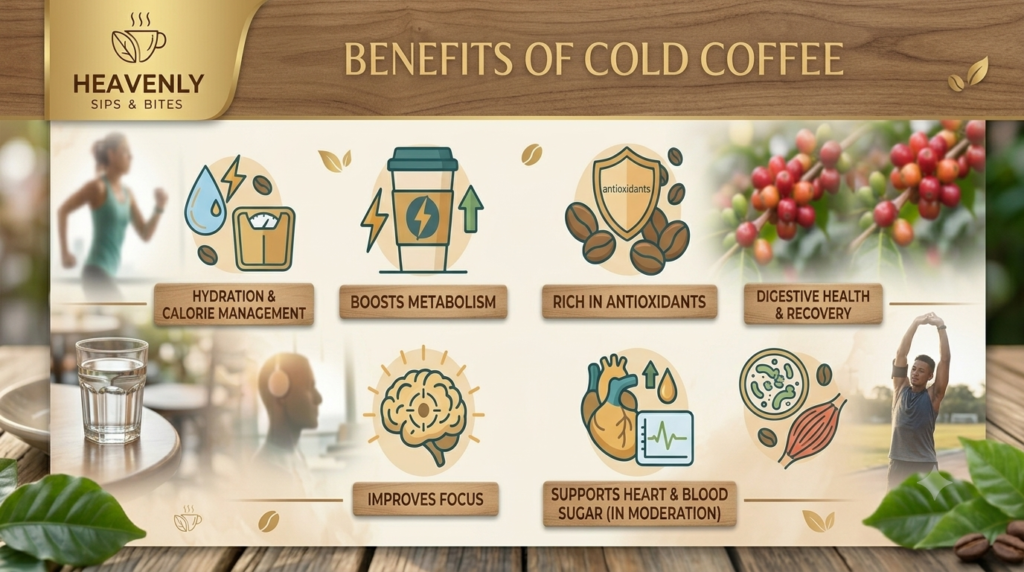
1. It Boosts Your Metabolism — and the Science Is Clear
Caffeine is one of the few compounds with consistent evidence for metabolic enhancement. Research published by the University of London found that caffeine can increase metabolic rate by up to 11%. A separate study showed caffeine led to a 13% increase in calorie burning and a 2-fold increase in fat burning.
Your morning or afternoon cold coffee can help your body burn slightly more energy throughout the day. The effect isn’t dramatic, but it’s real, measurable, and compounds over time with a consistent habit.
| Research: University of London — caffeine raises metabolic rate by up to 11%. Fat burning increases 2-fold after caffeine ingestion. |
2. Cold Coffee Is Rich in Antioxidants
A single roasted coffee bean contains over 1,000 bioactive compounds. The most studied are chlorogenic acids (CGAs), which act as antioxidants by reducing oxidative stress and inflammation in the body.
Research from the Mayo Clinic found that coffee supplies a significant portion of daily antioxidants for people whose diets lack adequate fruits and vegetables. For Pakistanis eating diets heavy on fried foods and refined carbohydrates, this matters more than it sounds — the antioxidants in cold coffee actively counteract some of that oxidative load.
3. It Supports Brain Function and Mental Alertness
Caffeine works by blocking adenosine receptors in the brain. Adenosine builds up throughout the day and makes you feel tired. When caffeine occupies those receptors instead, fatigue is delayed and mental clarity improves.
A study in Physiological Reports confirmed caffeine improved focus and attentiveness in participants. Research also links regular coffee consumption to reduced risk of Alzheimer’s and Parkinson’s disease. For students in Mirpur AJK or professionals working long hours, this is one of the most practical reasons to choose cold coffee over an energy drink or soft drink.
| Study finding: Caffeine reduces the risk of developing Alzheimer’s and Parkinson’s disease with regular consumption. — PMC/NCBI 2025 Review |
4. It May Reduce the Risk of Type 2 Diabetes
Coffee has been linked to improved insulin sensitivity. A 2025 review in Nutrients confirmed the association: regular coffee consumption is connected to reduced risk of developing type 2 diabetes, likely through the action of chlorogenic acids on blood sugar regulation.
The effect holds for both caffeinated and decaffeinated coffee — suggesting the non-caffeine compounds do much of this work. However, this benefit is wiped out if you’re drinking cold coffee loaded with 4–6 teaspoons of sugar. The same compound that helps regulate blood sugar cannot do its job if you’re simultaneously spiking it.
5. It Supports Heart Health (In Moderation)
Drinking 3–5 cups of coffee daily is the range associated with cardiovascular benefit in the research. A Tufts University study found that 1–2 cups daily was linked to lower risk of death from cardiovascular disease. The compounds responsible — caffeine, phenolic compounds, magnesium, and quinides — help stabilize blood sugar, increase insulin sensitivity, and lower blood pressure.
The caveat: people with already elevated blood pressure should be careful. Caffeine can cause a short-term blood pressure increase, and if yours is already high, regular caffeine intake may worsen it.
6. It Can Improve Mood
Research shows coffee is associated with a reduced risk of depressive symptoms, possibly through its antioxidants, caffeine content, anti-inflammatory effects, or changes to gut microbiota. (Source: Nutrients, 2025 — PMC)
Caffeine increases dopamine absorption by binding to adenosine receptors, stimulating the brain’s reward and motivation centres. Regular caffeine consumers are reportedly around 8% less likely to develop depression. For something as simple as a cold coffee at your local cafe, that’s a meaningful mental health benefit.
7. It’s More Stomach-Friendly Than Hot Coffee
Cold brew specifically has lower acidity than hot-brewed coffee because heat triggers the release of acidic compounds that cold water does not. For people in Pakistan who experience acid reflux or a sensitive stomach after hot coffee, cold brew is a genuine alternative.
Cold coffee blended with milk has a similar effect — the milk neutralizes some acidity, making it easier on the digestive system.
The Risks and Side Effects of Cold Coffee: What Pakistanis Need to Know
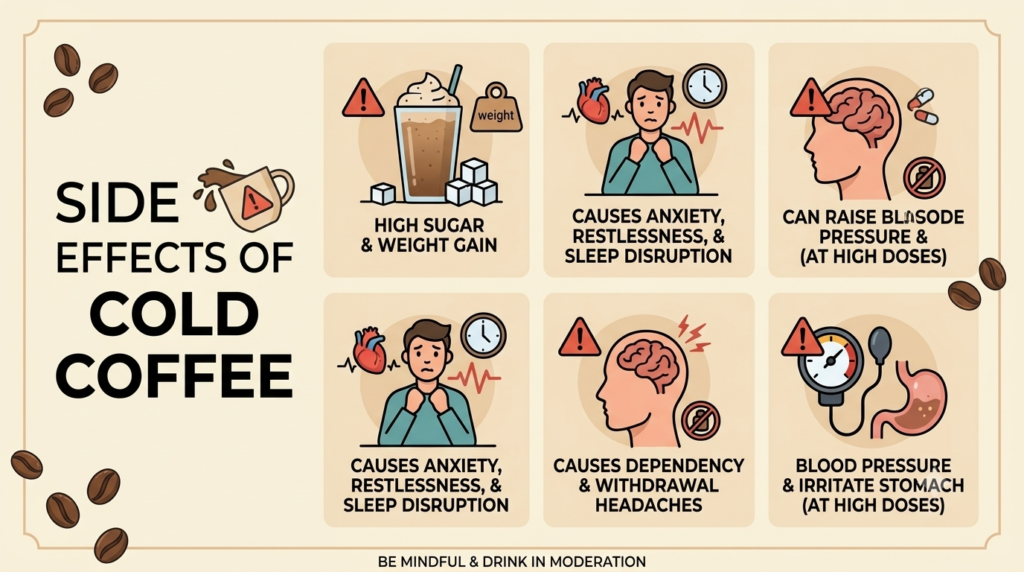
Risk 1: The Sugar Problem Is Serious
This is the biggest issue with cold coffee in Pakistan. A standard cold coffee at many local cafes contains 4–8 teaspoons of sugar, full-fat cream, sweetened condensed milk, or flavoured syrups. A blended cold coffee with cream and 5 teaspoons of sugar can contain 300–500 calories — more sugar than two cans of cola.
The fix: ask for less sugar, skip the cream topping, or choose an iced americano when you want the health benefits without the calorie load.
Risk 2: Caffeine Sensitivity Varies
Most healthy adults handle 200–400 mg of caffeine daily without issues. But caffeine sensitivity varies — some people experience anxiety, restlessness, insomnia, or a racing heart at much lower doses. Cold brew, with its higher caffeine concentration, is the version to be most careful with if you know you’re sensitive.
Risk 3: It Can Disrupt Sleep
Caffeine has a half-life of around 5–6 hours. Half the caffeine in a cold coffee you drink at 3 pm is still active at 9 pm. For Pakistanis already dealing with poor sleep quality, late-afternoon cold coffee makes the problem worse. A practical rule: have your last cold coffee by 2 pm.
Risk 4: It Can Cause Dependency
Regular caffeine consumption leads to physical dependency. Miss a day and you’ll likely experience a headache, fatigue, and mild irritability — classic withdrawal symptoms. This isn’t dangerous, but it’s worth knowing you’re forming a daily physiological habit.
Risk 5: High Intake Can Raise Blood Pressure
People with hypertension should be cautious. The research on 3–5 cups improving heart health applies to people with normal baseline blood pressure. If yours is already elevated, consult your doctor before making cold coffee a daily habit.
Cold Coffee vs Iced Americano: Which Is Healthier?
This comparison comes up often, and the answer is clear: an iced americano is healthier — with one caveat.
| Cold Coffee (Blended) | Iced Americano |
| Espresso + milk + sugar + ice150–500+ calories Familiar Pakistani taste | Espresso + cold water + ice5–15 caloriesFull antioxidant + caffeine benefits |
If you’re drinking cold coffee for the health benefits — metabolism, antioxidants, mental clarity — an iced americano with little or no sweetener gives you everything the research supports, without the sugar that cancels those benefits out.
How Much Cold Coffee Should You Drink Per Day?
1–2 servings per day is safe and beneficial for most healthy adults
Keep total daily caffeine under 400 mg (roughly 4 standard espresso shots)
Avoid caffeine after 2 pm if sleep quality matters to you
If pregnant: limit to 200 mg caffeine daily (roughly 1 standard cold coffee)
Children and teenagers under 16 should avoid cold coffee entirely
If you have high blood pressure, anxiety disorder, or heart arrhythmia — consult your doctor first
What to Look for in a Good Cold Coffee in Pakistan
Not all cold coffee is equal. Here’s what separates a health-supporting cold coffee from a dessert in disguise:
Espresso base over instant coffee. Real espresso retains more chlorogenic acids and trigonelline. Instant coffee has a fraction of these compounds after processing.
Controlled sweetness. Ask for ‘less sweet’ or ‘no sugar’ if you’re ordering for health reasons, not just taste.
Fresh milk over cream. Whole milk adds protein and calcium. Heavy cream adds mostly saturated fat. Ask for low-fat milk if you’re watching calories.
Clean ice. In Pakistan, ice quality varies. Cafes using filtered water for their ice are worth prioritizing — contaminated ice negates any health benefit.
| Order in Mirpur AJK: Heavenly Sips & Bites (Sector F1, Kotli Road, Mirpur AJK) offers house cold coffee and iced americano — with free home delivery across Mirpur. Order at theheavenly.pk or call 0344 8822300. |
The Bottom Line
Cold coffee is genuinely good for you — when it’s made right. The science on caffeine, chlorogenic acids, and coffee’s antioxidant profile is strong and consistent. The 2025 research now frames coffee not just as a beverage but as a functional food with measurable effects on metabolism, brain health, heart function, and mood.
The problem is not the coffee. It’s the sugar, the cream, and mindless daily consumption without any awareness of what you’re drinking. A cold coffee with 6 teaspoons of sugar twice a day isn’t a health habit — it’s a slow tax on your blood sugar and your waistline.
Drink good coffee. Drink it consistently but not excessively. Control the sweetness. Know what you’re putting in your body. Do that, and your cold coffee habit is working for you rather than against you.